Backyard chickens · getting started
From Chicks to First Eggs
The first bag feeds a growing bird. The layer bag supports a hen making eggs. Here’s how to connect the two without rushing the change.
For backyard chickens raised for eggs. Other poultry species and meat birds need their own feeding plans.
- 01HatchFeed for chicks
- 02GrowFollow the bag’s stage
- 03LayMeet eggshell calcium needs
The feed changes with the bird. The current tag sets the timing.
In this guide
Feed for growth before you feed for eggs
Bringing chicks home? Start with Baby Chick Care & Nutrition for brooder setup, warmth, water, and daily checks.
Chicks need a balanced diet for their age and purpose. Choose a complete feed whose directions include young chickens. A layer ration has a different job: supplying the calcium needed for eggshells. Its higher calcium level is unsuitable for chicks. [1]
Protein is one part of the choice. The feed also needs to supply energy, amino acids, vitamins, and minerals in balance. Keep the complete ration as the main meal, rather than trying to make a chick diet from scratch grains or scraps. [3]
One Show Flock path from hatch to lay
These are product examples, not a universal age calendar. Read the current bag’s directions for the feed you buy.
Start: Show Flock Starter
Show Flock Starter has directions for chicks from hatch, followed by Show Flock Developer. Use its stage and transition instructions. [4]
Grow: Show Flock Developer
Show Flock Developer supports the growing stage. Its own feeding directions also allow chickens to receive it from hatch to laying age, so a separate starter bag is not the only route. [5]
Lay: Show Flock Layer 22
At the laying stage, Show Flock Layer 22 is a layer-feed option. Match the change to laying status and the current bag’s instructions, rather than a birthday alone. [1, 6]
Match calcium to who shares the feeder
An adult hen-only flock in lay can use an appropriate layer ration. Laying hens need calcium for shell production; growing birds have different requirements. [1]
If roosters or growing pullets share the feeder, follow the mixed-flock approach in our moulting guide: an age-appropriate, lower-calcium complete feed with oyster shell offered separately for laying hens. Show Flock Developer’s directions permit use for laying poultry with supplemental calcium. Check shell quality and ask for a tailored plan if the arrangement is not working. [5, 7]
Keep the daily routine simple
- Keep feed and fresh water available. Check both every day.
- Protect the main ration. Scratch and treats can dilute a complete feed when they replace too much of it.
- Store feed dry. Keep it clean, protected from rodents, and away from moisture.
Daily feeding and storage guidance: [2]
Follow the bag’s instructions when changing products. Developer specifies a gradual change over seven days. [5] Read How to Read Your Feed Tag if the guarantees or directions are unfamiliar.
For feed selection, ask our nutritionist. A bird that appears ill needs a veterinarian’s attention.
Sources
The sources explain age-specific nutrition and everyday feeding. Tucker product examples follow published directions; the current bag tag is your product reference.
-
Home Layer Flock Management Suggestions ↩
Young birds, laying diets, and calcium. Accessed October 8, 2026.
-
Feed and water access, treat dilution, and dry storage. Accessed October 8, 2026.
-
Balanced rations for age and laying status. Accessed October 8, 2026.
-
Mixed-flock feeding approach ↩
Retains the existing lower-calcium feed and separate laying-hen calcium approach.
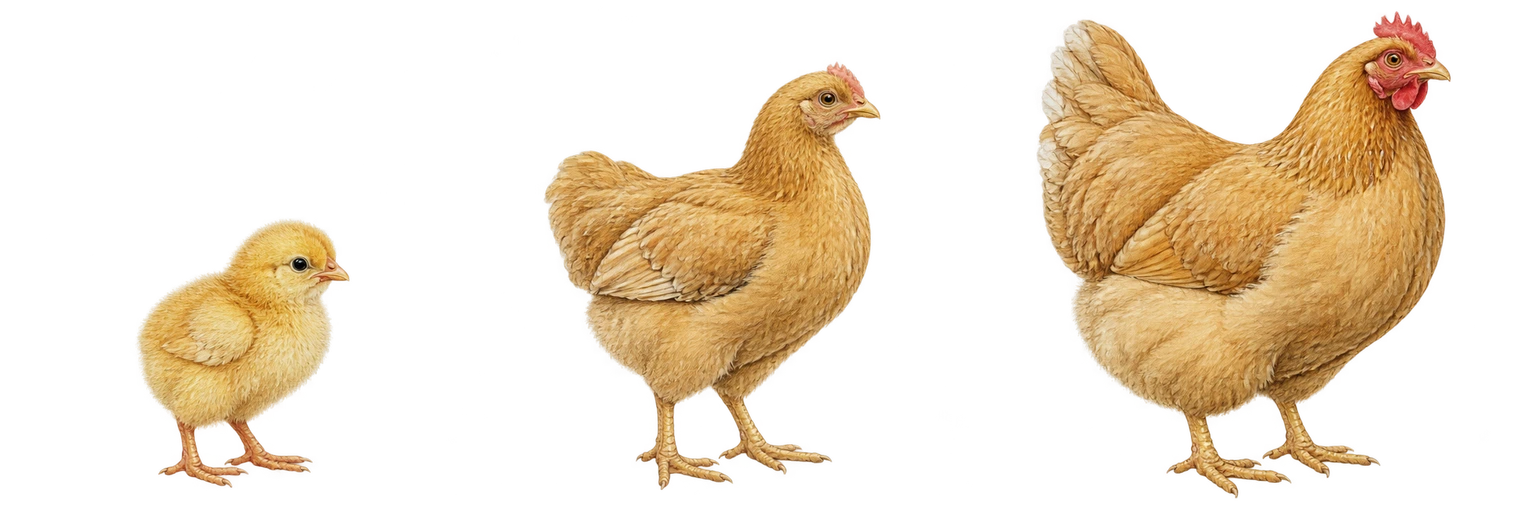
Illustration: original artwork generated for Tucker Milling with AI assistance. It depicts a chick, a growing pullet, and an adult hen.