Backyard flock care
Backyard Flock Moulting Guide
Fewer eggs. Feathers everywhere. A flock that looks a little unfinished. Moulting is a normal part of a hen’s life—and good feeding and steady care help her through it.
This guide focuses on adult backyard chickens. Moulting is also spelled “molting.”
Planning window
6–12 weeks
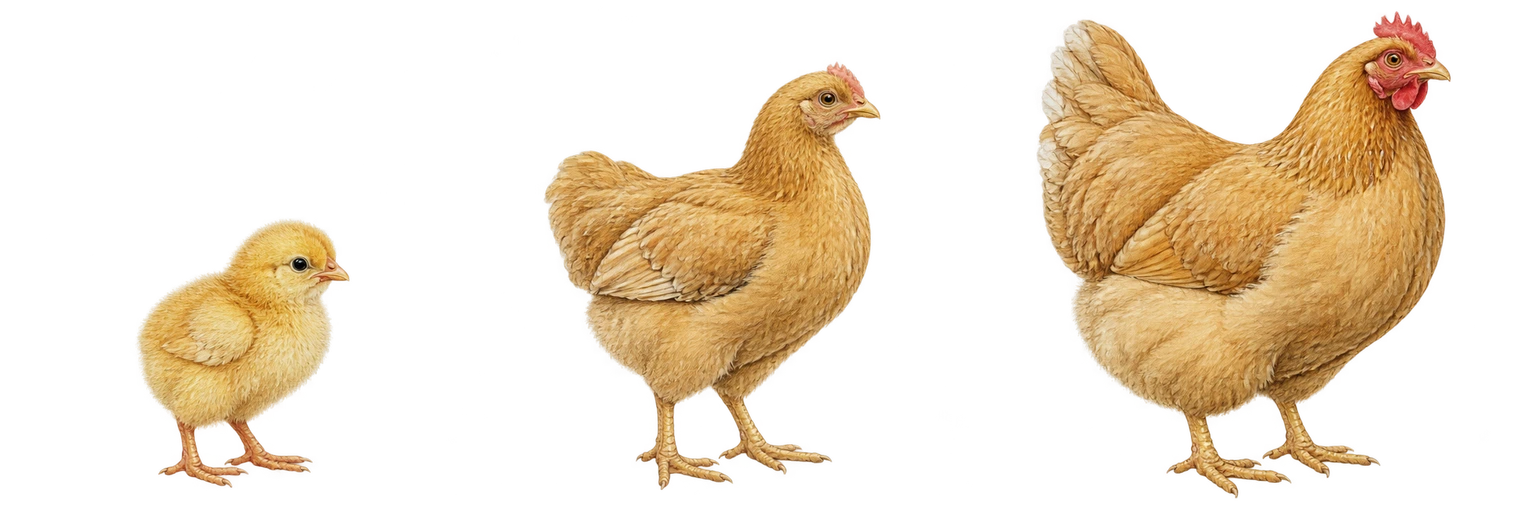
In order, not to scale
- Feathers drop
- Pin feathers emerge
- New plumage grows
- Laying returns as days allow
In this guide
What does a normal moult look like?
Adult hens commonly replace feathers as days shorten, often in late summer or autumn. Timing varies with age, breed, and the individual bird. Some lose feathers gradually; others become noticeably bare. New feathers emerge in narrow protective sheaths, often called pin feathers.
Egg production usually slows or stops. Allow several weeks: roughly 6–12 weeks is a useful planning window, but some birds take longer. A healthy bird should remain alert and continue eating and drinking. Use feather regrowth and body condition to judge progress, rather than a fixed deadline. [1, 5, 7]
Feed for feathers—and for any eggs still being laid
Feathers are built from protein. The amino acids within that protein matter, especially the sulfur-containing amino acids methionine and cysteine. A high protein percentage alone does not tell you whether a diet is balanced. Start with a complete poultry feed, rather than trying to rebuild the ration with corn, seeds, or insects. [2, 4]
Our practical approach: a balanced 20% grower/developer feed is an option for adult birds taking a laying break. If hens are still laying, maintain their calcium supply. Higher-protein layer feed is another option for a hen-only flock. There is no single protein percentage that every moulting hen must receive.
Choose the plan that fits your flock
| Your flock | Main feed | Calcium management |
|---|---|---|
| Adult hens have stopped laying | Show Flock Developer supplies 20% protein with lower calcium than a layer ration. | Keep poultry oyster shell available separately in case a hen continues laying or starts again. Non-laying hens do not need layer-level calcium for feather growth. |
| Some hens are still laying | Keep an appropriate complete layer feed. Show Flock Layer 22 offers 22% protein and layer-level calcium. An existing balanced layer ration can also be continued. | Do not remove calcium because other hens are moulting. Continuing a layer ration through a staggered moult is a practical choice for an adult hen-only flock. |
| Roosters or growing pullets share the feeder | Choose an age-appropriate, lower-calcium complete feed such as Developer, following the bag directions. | Provide oyster shell in its own feeder for laying hens. Developer is labelled for laying poultry only with supplemental calcium. Watch shell quality and intake; ask for a tailored plan if needed. |
Make complete feed the main meal
- Feed free choice. Refill before feeders run empty, and provide fresh water throughout the day. Never withhold feed or water to induce a moult.
- Change feeds gradually. Blend in the new ration over about seven days, following the bag directions.
- Keep treats small. Scratch, kitchen scraps, seeds, and insects can displace amino acids, vitamins, and minerals. Treats are optional; reducing them during the moult helps protect the balance of the main ration.
- Use insects as a supplement. Tucker Black Soldier Fly Larvae can complement complete feed in modest portions. They do not replace it or a laying hen’s calcium program.
- Separate calcium from grit. Oyster shell supplies calcium. Insoluble poultry grit helps grind whole grains and other coarse foods; it does not replace oyster shell.
Give older hens extra attention
Backyard hens may remain in the flock for years. Watch each older bird’s appetite, access to feeders, body condition, and shell quality when laying resumes. A hen laying fewer eggs still needs adequate calcium for each shell she produces.
Older hens can develop weaker shells. A complete layer ration and a separate source of poultry oyster shell can help support calcium intake. Repeated thin or soft shells, weakness, or persistent weight loss deserve a closer assessment of the entire feeding and health program—not simply more treats or calcium mixed into the feed. [2, 3]
A daily care checklist
- Protect from wet and wind. Keep bedding dry and block drafts at bird level while maintaining ventilation. A heavily bare hen may need a more sheltered space during cold weather.
- Keep routines steady. Avoid unnecessary flock changes. Provide enough feeder and waterer access that timid birds can eat without being chased away.
- Be gentle with new feathers. Limit unnecessary handling and avoid rubbing or pulling pin feathers. Check for pecking and bleeding; protect an injured bird from further attack.
- Watch body condition. Check birds gently and track weight when practical. Feathers can hide a thin hen. Persistent loss or a prominent keel needs attention.
- Let the seasonal break happen. For a backyard flock managed on natural daylight, accept fewer eggs during the moult. Do not abruptly increase lighting to try to rush birds back into lay.
Not every missing feather is a moult
Feather loss concentrated on the back or neck may come from mating. Damaged feathers, skin irritation, or debris around the vent may point to lice or mites. Visible feather pulling, wounds, or bleeding suggest pecking. Check birds and housing instead of assuming every bare patch is seasonal. [4, 5]
If parasites are confirmed, use a treatment approved for poultry and follow its directions and any egg restrictions. Routine medication or worming is not a treatment for normal moulting.
When feathers return, reassess the feeding plan
New plumage does not guarantee an immediate return to eggs. Short winter days can continue to limit production after feathers have grown back. Older hens may also lay fewer eggs than younger birds. [1, 7]
As laying resumes, make sure calcium is already available. For an adult hen-only flock, transition back to a suitable layer ration over about seven days. A mixed flock can stay on an appropriate lower-calcium feed with separate oyster shell for layers, as directed on the tag. Continue checking shell quality, appetite, and body condition.
Sources
Recommendations combine Extension guidance with Tucker Milling product directions. This guide supports natural moulting in backyard flocks; it is not a commercial induced-moult program.
Product labels: Show Flock Developer and Show Flock Layer 22.