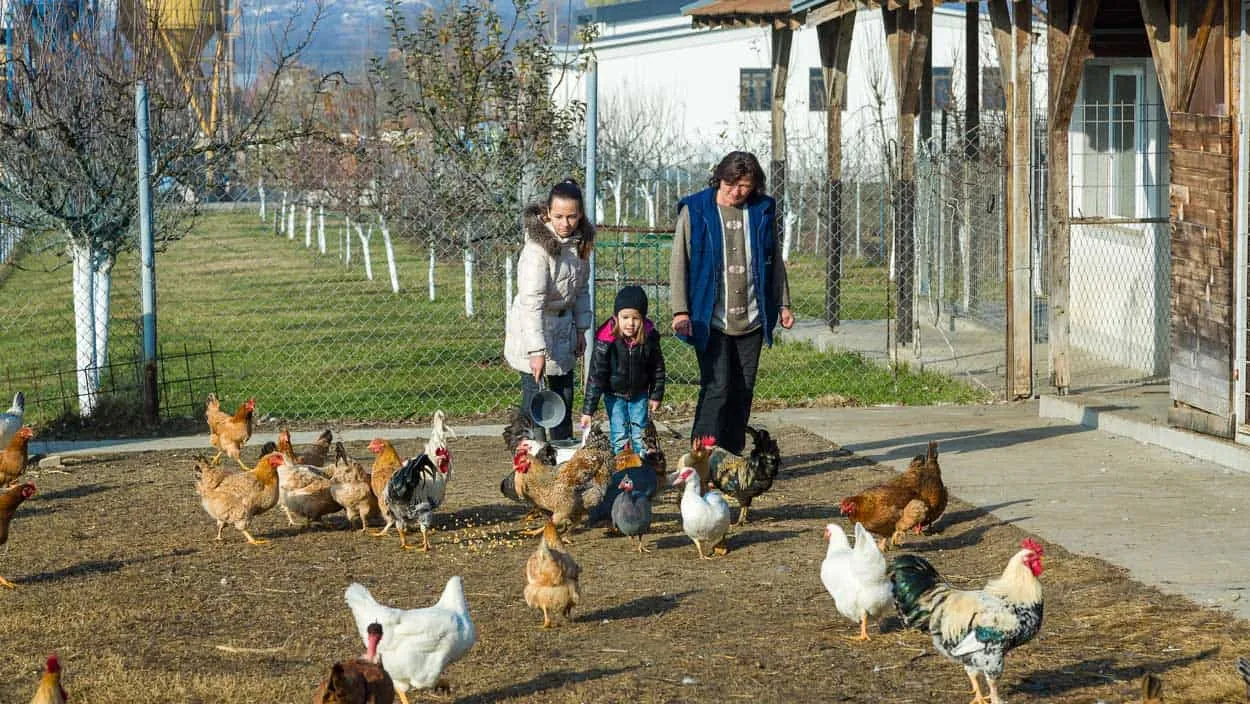

- Protein
- 22%
- Fat
- 3.25%
- Fiber
- 4.0%
Tucker Milling · Quail and Game Bird
Quail & Game Bird Layer/Breeder
An ultra premium 20% crumble for laying and breeding quail, pheasants, chukars, turkeys, and other exotic gamebirds

- Bag
- 50 lb bag
- Form
- Crumble
- For
- Flock
- Protein min
- 20%
- Fat min
- 3.25%
- Fiber max
- 4.0%
- Calcium
- 2.75–3.25%
Quail and Game Bird
Quail & Game Bird Layer/Breeder
Guaranteed analysis
| Nutrient | Basis | Amount |
|---|---|---|
| Crude Protein | Min | 20% |
| Lysine | Min | 1.0% |
| Methionine | Min | 0.5% |
| Threonine | Min | 0.8% |
| Fat | Min | 3.25% |
| Fiber | Max | 4.0% |
| Calcium | Min | 2.75% |
| Calcium | Max | 3.25% |
| Phosphorus | Min | 0.7% |
| Salt | Min | 0.3% |
| Salt | Max | 0.8% |
| Sodium | Min | 0.18% |
| Sodium | Max | 0.22% |
| Copper | Min | 140ppm |
| Selenium | Min | 0.4ppm |
| Zinc | Min | 150ppm |
| Manganese | Min | 150ppm |
| Vitamin A | Min | 5,300 IU/lb |
| Vitamin D3 | Min | 2,500 IU/lb |
| Vitamin E | Min | 135 IU/lb |
| Total Microorganisms | Min | 23,000,000 CFU/lb |
Feeding guide
- If Raising for Eggs
- Feed Tucker Milling Quail & Game Bird Starter from day of hatch until the first egg appears.
- If Raising for Meat
- Feed Tucker Milling Quail & Game Bird Starter from 0 to 6 weeks of age.
- If Raising for Flight
- Feed Tucker Milling Quail & Game Bird Starter from 0 to 6 weeks of age.
- If Raising for Eggs
- Feed Tucker Milling Quail & Game Bird Starter from 0 to 8 weeks of age.
- If Raising for Meat
- Feed Tucker Milling Quail & Game Bird Starter from 0 to 8 weeks of age.
- Storage
- For best results, store in a cool, dry area away from rodents and insects. Use within 30 days of the date of manufacture.
Always provide plenty of fresh, clean water. If changing feeds, incorporate the new feed slowly over a 7-day period.
Quail and Pheasants
Switch to Tucker Milling Quail & Game Bird Layer/Breeder after the first egg appears and feed until you wish to stop production.
Switch to Tucker Milling Quail & Game Bird Grower and full-feed until birds reach market weight.
Switch to Tucker Milling Quail & Game Bird Grower from 6 weeks until release.
Flight birds are conditioned by management, not by a different feed. Feed to maintain lean, athletic condition rather than full-feeding for weight, and provide flight-pen space so birds develop wing and breast strength ahead of release. The 22% protein and sulfur amino acid levels in Quail & Game Bird Grower support the feather quality flight birds depend on — do not step birds down to a lower-protein ration in an attempt to hold back size.
Turkeys
Switch to Tucker Milling Quail & Game Bird Grower from eight weeks until the first egg appears (around week 28).
Provide Tucker Milling Quail & Game Bird Layer/Breeder after the first egg appears and feed until you wish to stop production.
Switch to Tucker Milling Quail & Game Bird Grower until turkeys reach market weight.
Always follow the feeding directions on the bag tag. Questions? Ask our nutritionist or call (256) 582-2552.
Features & benefits
- Supports egg production, shell quality, fertility, and hatchability.
- Enhances vitality of newly hatched chicks and poults.
- Ensures optimal maternal transfer of immunity.
- Increases feed efficiency and performance.
Tucker Milling Quail & Gamebird Layer and Breeder is so much more than just protein, fat, and fiber. It’s targeted nutrition formulated to support egg production, internal egg quality, shell quality, fertility, hatchability and the subsequent performance and vitality of chicks and poults.
Ingredients
71 ingredients, in the order the tag lists them.
- Ground corn
- Dehulled soybean meal
- Wheat middlings
- Calcium carbonate
- Deoiled corn distillers dried grains with solubles
- Grain distillers dried yeast
- Porcine meat and bone meal
- Monocalcium phosphate
- Hydrated sodium calcium aluminosilicate
- Unrefined salt
- Lignin sulfonate
- DL-methionine hydroxy analogue
- L-lysine
- L-threonine
- Dried yeast culture (Saccharomyces cerevisiae)
- Dried extracted Streptomyces fermentation solubles
- Dried fermented corn extractives
- Salt
- Vitamin A supplement
- Vitamin D3 supplement
- Vitamin E supplement
- Menadione sodium bisulfite complex (source of vitamin K activity)
- Niacin
- Thiamine mononitrate
- Riboflavin supplement
- Pyridoxine hydrochloride
- Calcium pantothenate
- Biotin
- Folic acid
- Vitamin B12 supplement
- Manganous oxide
- Manganese sulfate
- Manganese amino acid complex
- Ferrous sulfate
- Copper oxide
- Copper amino acid complex
- Zinc oxide
- Zinc sulfate
- Zinc amino acid complex
- Calcium iodate
- Cobalt carbonate
- Cobalt glucoheptanate
- Copper sulfate
- Sodium selenite
- Dried macleaya cordata extract
- Dried Talaromyces versatilis fermentation extract
- Dried Lactobacillus acidophilus fermentation product
- Dried Lactobacillus casei fermentation product
- Dried Lactobacillus reuteri fermentation product
- Dried Bifidobacterium bifidum fermentation product
- Dried Bifidobacterium thermophilum fermentation product
- Dried Bifidobacterium animalis fermentation product
- Dried Bifidobacterium infantis fermentation product
- Dried Enterococcus faecium fermentation product
- Dried Bacillus subtilis fermentation product
- Dried Bacillus licheniformis fermentation product
- Choline chloride
- Lactose
- Mineral oil
- Vegetable oil
- L-valine
- Sodium propionate
- Calcium propionate (preservatives)
- Active dry yeast (Saccharomyces cerevisiae)
- Bentonite
- Diatomaceous earth
- Dried kelp
- Ground fenugreek
- Yucca schidigera extract
- Citrus peel
- Lemon extract
Dealers near you
Enter your ZIP code or town to see the nearest stores. Stock varies from store to store, so call ahead for Quail & Game Bird Layer/Breeder.
Enter your ZIP or town to see the three stores nearest you.
Questions about this feed
Short answers to what people ask. Always follow the feeding directions on the bag tag.
-
What if roosters share the feeder?
For a flock with actively laying hens, our poultry finder still recommends an appropriate layer feed and explains the shared-feeder consideration. A developer feed with oyster shell offered separately is an alternative to discuss for your particular flock. Find a feed for your flock →
-
Can every bird in a mixed flock eat the same feed?
The youngest birds, species, and laying status all matter. Use the mixed-flock options to account for chickens, waterfowl, and other birds sharing the feeder. Check your mixed flock →
-
When do chicks move from starter to grower to layer feed?
Follow the feeding stages on the specific bag. Start chicks on an appropriate starter, use a grower or developer for growing pullets, and move hens to an appropriate layer feed as they approach laying, according to the product directions. Meat birds, turkeys, and gamebirds need their own feeding programs. Find a feed for your birds →
-
Can young chicks eat layer feed?
Layer feed has calcium levels intended for egg production and is not an appropriate starter for young chicks. Keep chicks on feed suited to their age. If chicks share a feeder with adult layers, ask for a mixed-age feeding plan. Check your mixed-age flock →
-
What is the difference between grit and oyster shell?
Insoluble grit helps the gizzard grind foods such as whole grains. Oyster shell supplies calcium and serves a different purpose; the two are not interchangeable. Use age-appropriate grit when birds need it, and plan calcium supplementation around their laying status and complete feed. Ask about your flock →
-
2 more questions
-
Can scratch grains replace complete feed?
No. Scratch grains are not a complete diet. Keep an appropriate complete feed as the foundation of the feeding program and offer scratch as an occasional treat, rather than mixing it into the complete feed and changing the nutrient balance. Read University of Georgia guidance →
-
What should I feed during a moult?
Provide an appropriate complete feed, fresh water, and consistent care while birds replace feathers. Avoid diluting their ration with large amounts of scratch or treats. Review the flock’s laying status and shared-feeder needs when choosing the feed. Read the Backyard Flock Moulting Guide →
-
More Tucker Milling flock feeds

- Protein
- 28%
- Fat
- 3.0%
- Fiber
- 4.0%
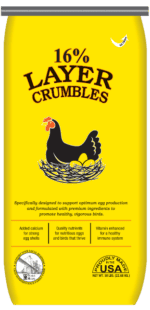
- Protein
- 16%
- Fat
- 3.0%
- Fiber
- 6.5%
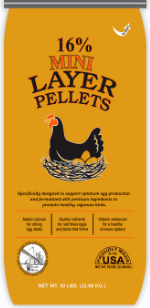
- Protein
- 16%
- Fat
- 3.0%
- Fiber
- 6.5%