
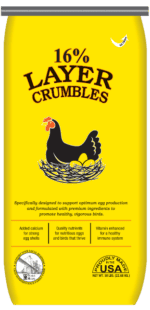
- Protein
- 16%
- Fat
- 3.0%
- Fiber
- 6.5%
Tucker Milling · Supplements
Starter Booster Pellets
A pelleted supplement for a wide range of species.
- Protein min
- 25%
- Fat min
- 3.00%
- Fiber max
- 6.00%
Supplements
Starter Booster Pellets
Guaranteed analysis
| Nutrient | Basis | Amount |
|---|---|---|
| Crude Protein | Min | 25% |
| Lysine | Min | 1.40% |
| Methionine | Min | 0.35% |
| Crude Fat | Min | 3.00% |
| Crude Fiber | Max | 6.00% |
| Acid Detergent Fiber ADF | Max | 10% |
| Calcium | Min | 0.8% |
| Calcium | Max | 1.2% |
| Phosphorus | Min | 0.60% |
| Sodium | Min | 0.20% |
| Sodium | Max | 1.00% |
| Copper | Min | 15 ppm |
| Copper | Max | 35 ppm |
| Zinc | Min | 125 ppm |
| Manganese | Min | 80 ppm |
| Vitamin A | Min | 20,000 IU/lb |
| Vitamin D3 | Min | 2,000 IU/lb |
| Vitamin E | Min | 200 IU/lb |
Feeding guide
- Horses
- For foals, feed twice daily at a rate of 1/2 lb. per head per day. For growing horses, feed 1 to 1 1/2 lbs. per head per day. Add 33% to a 12% all grain to create a 16% mare & foal feed.
- Cattle
- For calves, beginning in the first week starter booster may be fed at a rate of 1 lb. per head per day as a sole ration or added to calf starter. For other cattle, feed 1/2 to 1 lbs. per head per day.
- Goats
- Feed 1/4 to 1/2 lbs. per head per day.
- Poultry
- 1 tablespoon per day or 1/4 cup per 4 birds per day
- Pigs
- For piglets, feed 1/8 to 1/4 lb per head per day. For show pigs, feed 1/2 to 1 lb per head per day. For gestating sows, feed 1/8 to 1/4 lb per head per day. For lactating sows, feed 1/2 to 3/4 lb per head per day. For boars, feed 1/4 to 1/2 lb per he
- Rabbits
- 1 teaspoon to 1 tablespoon per day Always provide plenty of fresh, clean water. If changing feeds, incorporate the new feed slowly over a 7-day period.
Plan your feeding amount
Bag duration
Starter Booster Pellets
Starter Booster Pellets50 lb bag
This feed’s published directions depend on age, forage, or the individual horse, so the calculator does not work out an amount. Read the directions, then enter the amount you feed to see how long a bag lasts.
Set daily amount and bag weightHow long a bag lasts
Enter the amount you feed each day.
What you feed
Weigh feed in pounds; scoop sizes vary. Always provide fresh water and follow the current bag tag.
How this is calculated
These calculations apply the published directions and do not assess the whole ration. A range given per 100 lb of body weight is multiplied by your horse’s weight ÷ 100; a fixed daily range is not. Bag duration is the bag weight divided by the daily amount. Pounds are shown to the quarter pound (to the hundredth below a pound), with a range rounded inward so it never leaves the published directions; days are shown to the half day, rounded down.
Always follow the feeding directions on the bag tag. Questions? Ask our nutritionist or call (256) 582-2552.
Features & benefits
- Balanced, digestible ingredients support growth and provide long lasting energy.
- Yeast and prebiotics maximize immunity and energy metabolism.
- Exceptional palatability encourages consumption.
- Minerals and vitamins promote a healthy appearance.
A pelleted supplement that provides a wide range of benefits to a wide range of species. Starter Booster is formulated and safe for all life stages of a variety of species, including horses, cattle, goats, swine, poultry, rabbits, and deer.
Also available in 10 lb bags
Ingredients
56 ingredients, in the order the tag lists them.
- Dehulled soybean meal
- Ground corn
- Feeding oatmeal
- Dried whey
- Dehydrated alfalfa meal
- Stabilized rice bran
- Ground feed wheat
- Soybean hulls
- Cane molasses
- Calcium carbonate
- Hydrated sodium calcium aluminosilicate
- Unrefined salt
- Yeast culture (Saccharomyces cerevisiae)
- Organic dried kelp
- Vegetable oil
- Monocalcium phosphate
- Lignin sulfonate
- Ground fenugreek (Trigonella foenum-graecum) cotyledons
- Yucca schidigera extract
- Iron oxide
- Natural and artificial flavors
- Vitamin A supplement
- Vitamin E supplement
- Vitamin D3 supplement
- Magnesium oxide
- Niacin
- Zinc proteinate
- Zinc hydroxychloride
- Manganese hydroxychloride
- Copper sulfate
- Zinc sulfate
- Selenium yeast
- Copper hydroxychloride
- Copper proteinate
- Ferrous sulfate
- Iron proteinate
- Manganese proteinate
- Manganese sulfate
- Zinc amino acid complex
- Manganese amino acid complex
- Copper amino acid complex
- Choline chloride
- Vitamin B12 supplement
- Ethylenediamine dihydroiodide
- Pyridoxine hydrochloride
- Menadione sodium bisulfite complex (source of vitamin K activity)
- Thiamine
- Biotin
- Folic acid
- Riboflavin supplement
- Calcium pantothenate
- Sodium selenite
- Mineral oil
- Calcium propionate
- Sodium propionate
- Propionic acid (preservatives)
Dealers near you
Enter your ZIP code or town to see the nearest stores. Stock varies from store to store, so call ahead for Starter Booster Pellets.
Enter your ZIP or town to see the three stores nearest you.
Questions about this feed
Short answers to what people ask. Always follow the feeding directions on the bag tag.
-
Can every bird in a mixed flock eat the same feed?
The youngest birds, species, and laying status all matter. Use the mixed-flock options to account for chickens, waterfowl, and other birds sharing the feeder. Check your mixed flock →
-
How do I change my horse to a different feed?
Make feed changes gradually, replacing a little of the old feed with the new feed at a time over about two weeks. Keep forage and water available, follow each product’s directions, and monitor appetite, manure, and body condition. Ask for an individual plan if your horse has a health concern. Read University of Minnesota guidance →
-
How do I measure a scoop of feed in pounds?
Weigh the empty scoop, then weigh it filled as you normally feed it and subtract the empty weight. Different feeds can weigh different amounts in the same scoop. Recheck when you change feeds; the feeding directions are based on weight.
-
Is a handful of feed enough to supply vitamins and minerals?
A fortified feed is intended to be fed at its recommended rate. A small handful may supply too little of its vitamin and mineral fortification. If your horse needs fewer calories, consider a ration balancer suited to the forage and feeding situation rather than simply cutting a conventional feed below its directions. Review Ultra Balancer →
-
Can I compare daily feeding cost instead of bag price?
Yes. Divide the bag price by its weight in pounds, then multiply by your daily feeding amount. Compare feeds at their own recommended rates and include any forage or supplements the feeding program needs. Your dealer can provide the current bag price.
-
5 more questions
-
When do chicks move from starter to grower to layer feed?
Follow the feeding stages on the specific bag. Start chicks on an appropriate starter, use a grower or developer for growing pullets, and move hens to an appropriate layer feed as they approach laying, according to the product directions. Meat birds, turkeys, and gamebirds need their own feeding programs. Find a feed for your birds →
-
Can young chicks eat layer feed?
Layer feed has calcium levels intended for egg production and is not an appropriate starter for young chicks. Keep chicks on feed suited to their age. If chicks share a feeder with adult layers, ask for a mixed-age feeding plan. Check your mixed-age flock →
-
What is the difference between grit and oyster shell?
Insoluble grit helps the gizzard grind foods such as whole grains. Oyster shell supplies calcium and serves a different purpose; the two are not interchangeable. Use age-appropriate grit when birds need it, and plan calcium supplementation around their laying status and complete feed. Ask about your flock →
-
Can scratch grains replace complete feed?
No. Scratch grains are not a complete diet. Keep an appropriate complete feed as the foundation of the feeding program and offer scratch as an occasional treat, rather than mixing it into the complete feed and changing the nutrient balance. Read University of Georgia guidance →
-
What should I feed during a moult?
Provide an appropriate complete feed, fresh water, and consistent care while birds replace feathers. Avoid diluting their ration with large amounts of scratch or treats. Review the flock’s laying status and shared-feeder needs when choosing the feed. Read the Backyard Flock Moulting Guide →
-
More Tucker Milling flock feeds
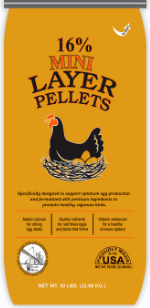
- Protein
- 16%
- Fat
- 3.0%
- Fiber
- 6.5%
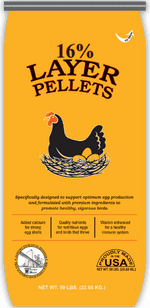
- Protein
- 16%
- Fat
- 3.0%
- Fiber
- 6.5%

- Protein
- 40%
- Fat
- 30%
- Fiber
- 5%